

 United States
 Macau, China
 France
 Philippines
 Singapore
 Netherlands
 United Kingdom
 Canada
 Argentina
 Germany
 Estonia
 Peru
Peru Russia
 Australia
 South Africa
 Nigeria
 Malaysia
 Singapore
 India
India Finland
 China
China Ukraine
 Hong Kong
 Cyprus
 Turkey
 Greece
 Ireland lottery results
 New Zealand lottery results
 Puerto Rico lottery results
North America Casinos
For a list of casinos in a specific country of North America, select a country from the list below. Only countries in North America with gambling or casinos are listed.


Top Rated Online Casinos for North America
Sort By
Casino is closed




















200,00$
-
800,00$
North America Casinos and Gaming Guide
This section of World Casino Directory deals specificially with North American casinos and gambling. The continent of North America has 3 countries with casinos in them and 3 countries with pari-mutuel facilities in them, including horse racing and dog racing or the newer racinos which have slots or video poker terminals within reach of the gamblers. Click the following articles for a run-down on specific gambling in this continent. North American Poker for the poker guide, or North American Lottery for North American lottery results and lottery information and last but not least visit this page for the current gambling news in North America.
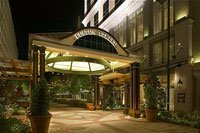
North America has more casinos than any other continent. This is of course mainly due to the more than 1,000 casinos in the United States. Besides the U.S. Casinos you will also find Mexico casinos and Canada casinos the other two countries in North America with legal gambling.
You will also find casinos in the Virgin Islands, which is a territory of the United States.
North America Casinos and Gambling have been a popular mode of entertainment in North America since its introduction by Europe 200 years ago. Today casinos are no longer those shady places where people played cards and carried pistols, instead poker (especially Texas Hold'em) has emerged as important style statements. Today poker is an important part of many luxurious casino resorts and are also found in novel settings such as on riverboat casinos.
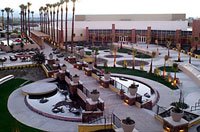 Dining in North American casinos and gambling resorts is normally inexpensive and you will find plenty of premium liquours and luxurious accommodations is too. All to lure people to the games. If you visit Las Vegas, Nevada make sure you try out the buffets, most casinos know you are looking and really throw a spread.
Popular North American casinos & gambling joints
There are over 1000 commercial casinos in North America and they generate approximately $29 billion in revenue each year. These include casino gaming establishments situated in the United States, Canada and Mexico. Of all American cities, Reno casinos, Las Vegas casinos and Atlantic City, New Jersey continue to lure the majority of gamblers to their destinations and millions cross the country towards their "Mecca" for gambling. Besides these popular places, a few of the popular gambling joints include those found in Biloxi, along the Mississippi Gulf Coast and various Indian reservations across the country. As per the American Gaming Association, 11 states consist of commercial casinos, 28 states have Indian casinos and 40 states and the District of Columbia have lotteries.
Popular North American tourist activities
The popular games at casinos are poker games, craps, blackjack, roulette and racing. While poker games in North America are quite prevalent and popular, legal poker casinos are not present everywhere. Also often poker is not offered along with casino gambling even though it is available - although this is changing thanks to the ever popular game of Texas Hold'em poker and Poker TV. Pari-mutuel racing is also quite popular and is sometimes provided in the form of dogs or horse racing at casinos (now called "racinos"). Other popular tourist activities for gamblers include lotteries, betting, raffles and pari-mutuel wagering that is authorized in 43 of the 50 American states, all of the Canadian provinces and 65 other countries across the world.
With the exception of Mexico casinos, North America casinos are nearly "widespread" - however we expect Mexico to welcome gambling soon, too.
Legality of Online Casinos
 Sept. 30, 2006: United States Congress has passed the Unlawful Internet Gambling Enforcement Act (UIGEA). The act makes it unlawful for certain types of transactions to be processed by banks. The law does not appear on the surface to actually make it illegal to gamble online, but makes it very difficult for American's to make deposits. Read more about it here: Internet Gambling Enforcement Act (UIGEA)
The legality of online gambling in North America is an issue of debate still. Authorities on gambling law state that no United States federal statute or regulation explicitly prohibits Internet gambling, either domestically or abroad. Despite this, the US government considers certain things to be illegal and worthy of prosecution. The wire act is often cited as the statute that makes online gambling a federal offense. While the wire act can be read differently, as long as online players do not participate in owning a share of the house rake; as long as wagering is only against each other; as long as players participate in the skill game and do not bet sports and as long as state laws are obeyed, the law is on your side.
United States
Unlike land-based gambling, which is more or less permitted in the majority of the United States, the situation with online gambling is rather complex. While the UIGEA did impose a ban on financial transactions involving online gambling service providers, it didn’t not explicitly outlaw this form of entertainment.
Following the Act, some companies decided to withdraw from the market while others continued offering their products and services to US customers. The number of online casinos welcoming US players is quite large, and it keeps expanding on a regular basis. As for the studios whose games are popular with the locals, those are Realtime Gaming (RTG) in the first place, followed by Vista Gaming, Slotland, Arrows Edge, Saucify, Nucleus Gaming, Rival, and others.
At the time being, more than 15 states permit people to gamble online legally. A relatively small number of states in completely against introducing this form of digital entertainment, while the others are making some sort of progress in the field.
Canada
On April 4, 2022, Ontario officially opened its online gambling market, making it legal for players to place bets on the Internet. Companies interested in operating in this market should obtain licenses from local regulators. There are two bodies in charge of regulating and supervising online gambling- The Alcohol and Gaming Commission of Ontario (AGCO) and iGaming Ontario (iGO).
In addition to fulfilling the necessary conditions issued by both institutions, companies are required to be compliant with a set of technical requirements as well. For example, the minimum spin speed is limited to 2.5 seconds. Also, auto-play on slot games is prohibited.
Up to date, a solid number of both online casino operators and content developers expressed their interest to operate in Ontario. Some of the licensed companies include Quickspin, Kalamba, Armadillo Studios, Wazdan, Evolution, Playtech, Wizard Games, LeoVegas, Rush Street Interactive, 888, and many more.
Other provinces, with a couple of exceptions, do offer some forms of online gambling, but Ontario is the only one with well-regulated market and precise guidelines.
Mexico
Since 2000, online gaming has been permitted via a special license, but only land-based operators have permission to offer their services in Mexico. A solid number of foreign operators have joined forces with local land-based operators. As in other corners of the world, offshore online casinos continue to target the locals. From July 1, 2020, interactive operators located in foreign jurisdictions need to pay 16% digital services tax.
Bingo
History of Bingo - North America
The origins of Bingo can be traced back as early as 1530, though the game did not reach North America until 1929. A toy manufacturer by the name of Edwin Lowe attended a carnival outside of Atlanta Georgia where he witnessed a game called 'Beano', using pre-marked cardboard cards in 5x5 rows, a rubber stamper and dried beans.
Lowe was fascinated with the popularity of Beano at the carnival. Those who played kept going and going until finally, around 3 a.m., they were told to go home - the game was over. Edwin Lowe went back to his home in New York where he created his own cards and introduced Beano to his friends.
Lowe's friends absolutely loved the game. Popular North American Bingo history states that it was one of these players who made Bingo history when he became so overwhelmed by his winning card that he shouted out, "Bingo!", rather than "Beano". And thus the modern name of Bingo was born. Lowe actually charged bingo operators $1 per year to use the name 'Bingo', as it's popularity spread rapidly.
Being the toy manufacturing businessman that he was, Lowe immediately hired a math professor from Columbia University, Carl Leffler, to develop more Bingo card combinations. By 1930, Leffler had created 6,000 Bingo card variations. It has been said that Leffler went insane soon after.
According to calculations, there are approximately 1,474,200 possible bingo card combinations in a standard 75-Ball bingo game. Little wonder Leffler is believed to have gone insane!
In the early 1930's a Catholic Priest from Pennsylvania approached Edwin Lowe with an intriguing idea. He wished to offer the game of Bingo to his congregation in an effort to raise funds for the church. Bingo history was made once again by this act. It is estimated that by 1934, more than 10,000 Bingo games were played each week as charitable events across North America.
Bingo in North America Today
In present day North America (United States, Canada and Mexico combined), more than $90 million is spent every single week by Bingo players. The majority if Bingo games are focused on charitable events, most commonly associated with religious organizations.
Church-run Bingo games are most commonly a weekly event, labeled 'Bingo Night', with small stakes and prizes. The maximum stakes and prizes differ by the legalities of each state and/or province. The majority of church-run bingo charity games end Bingo Night with what is known as a 'Coverall' game (the entire Bingo card must be covered to win), offering a much larger jackpot prize than the previous games of the night.
In the United States, only the state of Nevada allows legal Bingo within their casinos. Canada is home to thousands of Bingo Halls, both for charitable and casino style gaming.
Mexico explicitly outlawed most forms of gambling in 1947. For this reason, a traditional game of Bingo is not allowed in any Mexican casinos. However, Mexico is currently the largest market for the purchase of electronic bingo gaming machines. How could this be?
According to several video game machine manufacturers, casinos in Mexico are exploiting a loophole in the 1947 gambling laws. These laws specify 'Vegas-style machines', but allow an exception for 'electronic versions of numbers games'. That combined with the discretionary power of Mexico's Ministry of the Interior has developed Mexico into what's been called an electronic 'Bingo Bonanza'.
I'll conclude this article with a tid-bit of most interesting information: Should your name be 'Joe' or 'Margaret', you may be missing out if you don't play Bingo. It has been proven that men by the name of 'Joe' win more often than men by any other name, and women by the name of 'Margaret' win more often than women of another name. All of you Joe's and Margaret's of the world, grab your daubers and lucky bingo charms - game on!
Pari-mutuel
North American Pari-mutuel
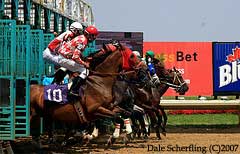 Flip through the tabs above to get information on Thoroughbred Horse Racing, Harness Racing, Greyhound Racing and Jai Alai in North America.
The parimutuel system is used in gambling on horse racing, greyhound racing, jai alai, and all sporting events of relatively short duration in which participants finish in a ranked order. A modified parimutuel system is also used in some lottery games.
Sports betting is covered in another section although it is listed under, and indeed in some instances is, pari-mutuel gambling.
Read our general articles on: World Horse Racing, Grehound Racing, Jai Alai, or visit the pari-mutuel section of our website for our complete guide.
Horse Racing in North America
 Horse racing may have come to the USA far later than some other continents but it is still steeped in history and has some of the most famous classics in world horse racing.
The famous “Triple Crown” consists of the Kentucky Derby, Preakness Stakes and Belmont Stakes. The Triple Crown starts with the Kentucky Derby on the first Saturday of May. The Preakness follows two weeks later. The Belmont Stakes is five weeks after the Kentucky Derby in early June. In the U.S., the term "Triple Crown" is the usual reference for these three horse races unless another sport is specified. Canada also has a “Triple Crown” of the Queens Plate, Prince of Wales Stakes and the Breeders Stakes which are all run in July and August.
There are 59 thoroughbred race tracks in the USA. In all, harness and thoroughbred racing at pari-mutuel tracks can be found in 31 states. Six tracks conduct both harness and thoroughbred meets.
In Canada all racing is overseen by the Canadian Pari-Mutuel Agency (CPMA), it lists 37 tracks in its membership, and also covers horse racing in, Alberta, British Colombia, Manitoba, Ontario, Quebec, Saskatchewan, New Foundland and Labrador, and the Maritime provinces. Canadian harness racing is more popular than thoroughbred and as big as any where in the world. All provinces are home to at least one major track. Ontario has a massive sixteen race tracks while Quebec hosts four and New Brunswick three.
Barrel Racing: two of a very few countries that host barrel racing are Canada and the USA and information can be found at the http://www.nbha.com National Barrel Horse Association.
Greyhound Races in North America
Greyhounds and greyhound racing date back to the time of the Pharaohs and we will cover this in much more detail in on our history of gambling sections. It was as far back as the mid 1800’s when greyhounds traveled to the States, they were brought over primarily to control the millions of pesky jackrabbits, with appetites capable of destroying the small farmers' cash crops. In 1886 the first formal coursing meet in America was held at Cheyenne Bottoms, near Great Bend, Ks. It was a huge success, attended by visitors from New York, Chicago, Los Angeles, Denver, Minneapolis and other places. The event was covered in Harpers Weekly. Soon after the American Course Board, a counterpart to England's National Coursing Club was founded.
Greyhound racing has come a long way since 1886 and after an explosion of interest and track building during the 20’s and 30’s the American Greyhound Track Operators Association (AGTOA) was formed in 1946. As of 2007 there are now 38 Greyhound tracks in 13 states. Greyhound ownership is very strictly regulated by the National Greyhound Association (NGA), which was founded in 1906 as the industry's official registry. Persons who own a racing or breeding greyhound must register with the NGA. They must agree to accept full responsibility for their greyhound's welfare at all times, or face severe consequences, including possible expulsion from the association. Such expulsion effectively means permanent banishment from participation in greyhound racing throughout the U.S.
Jai Alai Pari-Mutuel North America
Jai Alai came to the New World in Havana 1902, it soon spread to North America. The first jai-alai fronton in America was built in St. Louis, MO during the 1904 World's Fair. It opened on May 15.
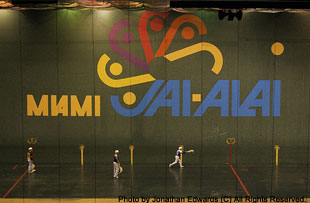 However, after only two months, the Jai-alai operations ended and the fronton later became the Winter Garden skating rink.
It was not until 1924 that first lasting Jai Alai fronton in the United States was located at the site of Hialeah Race Course near Miami. The fronton was relocated to its present site in Miami near Miami International Airport. Year round jai-alai operations include Miami Jai-Alai (the biggest in the world with a record audience of 15,502 people in 27 December 1975
North America has had many openings of closings of Jai Alai fontons and due to recent legislation changes to help keep the game alive, especially in Florida, the game is making a comeback. In Florida, which is undoubtedly the Jai Alai capital of the world, the legislature recently changed rules to help the game and as of 2007 Jai Alai pari-mutuels are now allowed to offer slot machines and even no limit poker sessions. Throughout the rest of the States these initiatives are being considered as it seems the game of Jai Alai is in terminal decline with many fontons closing due to lack of business.
By contrast, jai-alai's popularity in the north-eastern and western United States waned as other gambling options became available. Frontons in the Connecticut towns of Hartford and Milford permanently closed, while the fronton in Bridgeport was converted to a Greyhound race track. A fronton in Newport, Rhode Island, has been converted to a general gaming facility. Jai Alai enjoyed a brief and popular stint in Las Vegas, Nevada, with the opening of a fronton at the MGM Grand Hotel and Casino, however, by the early 1980’s the fronton was losing money and was closed by MGM Grand owner Kirk Kekorian. The MGM Grand in Reno also showcased jai-alai for a very short period (1978-1980).
In Canada there was a brief period of popularity for the game but now you will only find the game in Quebec, where many people of Basque descent grew up.
Gambling Law
This article is not extensive and is intended only as a general guideline to the casino and gambling laws that govern this location.
North America is a favorite destination for gamblers. However each country has their own set of laws that legalizes gambling or declares some games as illegal. But one thing that is common to law in every country is that each of them have gone through huge modifications and amendments to make gambling a fun activity for the players while at the same time curbing the social disorders (to the best of their abilities) that legalized gambling has brought about.
At this point, in one form or another, gambling is legal in every country within North America (Mexico, Canada and the United States of America).
Please contact us if you find any inaccuracies within our text.
Gaming law and casino laws in the United States of America
There has been tremendous development in gambling law within in the USA. Most of the states have increased the horizon of legalized gaming for regulated casino games and lotteries in the past few years. The country has witnessed the opening of a large number of Native American casinos and online betting and gambling has been given a lot of attention (although this topic remains in the gray area of the law still).
Casino Laws: The casino and gaming laws vary with each state in America. For example, in California, casinos are prohibited from playing blackjack. (So they play a form of blackjack that ads up to '22' instead of '21
In USA many of the games have been legalized like the state lotteries; pari-mutuel betting on horses, greyhounds, and jai-alai; sports book-making; card games; keno; bingo; slot machines; progressive slot machines; video poker machines; video keno machines; video blackjack machines; and video roulette machines.
Alabama: Lottery and land-based casino gambling are not regulated, and no commercial licenses are available for either product. Tribal land-based casino licenses are awarded for Class II gaming via state compacts. Onshore interactive operators are unlawful.
Alaska: Commercial land-based casinos are prohibited, except to Tribes on Indian reservation territory as agreed in tribal compacts. The legislation does not expressly encompass interactive gambling, but onshore companies are not permitted. The minimum gambling age for bingo is 19.
Arizona: Retail and online sports betting are both operated by commercial operators in partnership with tribes and professional sports teams in the state. Tribal land-based casinos run business under state compacts. Commercial land-based casinos are prohibited. The gambling age is 21 across all products.
Arkansas: Four commercial casino licenses were approved in the November 2018 state-wide referendum. They are also permitted to offer land-based sports betting. Retail sports betting was launched in 2019 while online went live in 2022.
California: California Lottery holds exclusive license over lottery products, while land-based casinos are commercially operated by Native Tribes. Card establishments and bingo are operated on a commercial basis. Interactive gambling is neither prohibited nor expressly regulated under State law.
Colorado: Colorado State Lottery holds a monopoly on lottery products. Commercial gaming and sports betting licenses are awarded for land-based casinos and land-based casinos on Indian territories. Online sports betting is permitted since May 1, 2020, while retail sports betting is live since June 17, 2020. The minimum age for gambling is 18, or 19 in gambling establishments that serve alcohol.
Connecticut: Retail and online sports betting as well as iGaming are offered by the Mashantucket Pequot and Mohegan, making Connecticut a tribal-led market. In May 2021, the state passed legislation to legalize sports betting, interactive gaming, and interactive lottery.
Delaware: The government-owned State lottery has the monopoly on most forms of gambling with the exception of horse racing and casino tables. Delaware was exempt from the Professional and Amateur Sports Protection Act of 1992 (PASPA) ban on sports betting. Delaware Gaming Competitiveness Act of 2012 allows online gambling on the lottery and casino games but with some limitations. Interactive sports betting is not authorized at the time being.
Florida: Native Tribe land-based casinos, casino boats card rooms, pari-mutuel wagering, and pari-mutuel gaming machines are permitted under State law. Interactive gambling is not yet defined.
Georgia: State lottery, bingo, and raffles are permitted, whereas land-based casinos, horse and dog race betting, pari-mutuel wagering, and commercial gambling are prohibited under State law. Interactive gambling is neither banned nor precisely regulated. The gambling age is 18.
Hawaii: There are no state-regulated land-based or interactive operators. No licenses are available for lottery or casino activity. Limited non-profit charitable gambling is authorized.
Idaho: According to the Constitution, any form of commercial casino gambling including, but not limited to, blackjack, craps, roulette, poker, baccarat, keno, and slot machines is prohibited. Tribal casinos are permitted to operate Class II and Class III gaming on Indian reservation land as determined by tribe-state compacts. Onshore interactive operators are not allowed to run business in the market. The minimum gambling age is 18.
Illinois: Casino, pari-mutuel wagering, bingo products, and lottery products operated by the Illinois State Lottery are permitted. The interactive market is partially regulated to permit lottery and horse racing products, however, interactive poker, casino games, and sports betting are not regulated. Online gambling is prohibited as well.
Indiana: Land-based and riverboat casinos that offer slots and table games are permitted, while racetrack casinos can offer slots games only. Poker is defined as a game of chance under State law and is illegal by definition. The interactive market is not yet regulated, and onshore interactive operations are currently prohibited.
Iowa: Land-based, riverboat, and racetrack casinos are permitted to offer slots and table games. Pari-mutuel wagering, pari-mutuel gaming machines, and charitable gaming are permitted, while commercially operated lotteries are prohibited. Sports betting is not regulated within the market, while interactive gambling is yet undefined. The gambling age is 21 across all product verticals.
Kansas: Commercial casino gaming is unlawful, but Tribal casinos are permitted to operate Class II and Class III gaming on Indian reservation land as determined by tribe-state compacts. Fantasy sports are legal and classified as a game of skill. Bingo is permitted for charitable organizations, while onshore interactive operators are unlawful.
Kentucky: State-run Kentucky Lottery holds an exclusive license on the operation of lottery products. Commercial licenses are not available for land-based casinos or tribal casinos on Indian reservation territory. There are no state-regulated interactive onshore operators.
Louisiana: Land-based, riverboat and racetrack casinos are permitted to offer slots, table games, and sports betting, while casinos and racetracks are allowed to offer video poker. Retail and online sports betting are operated via land-based, riverboat, and racetrack casinos.
Maine: State legislation allows for a maximum of two casinos to be located within state territory. Interactive gambling is not expressly prohibited, but there are no state-regulated interactive onshore operators. The minimum gambling age for Bingo is 16, while for other types of gambling it ranges between 18 and 21.
Maryland: Land-based casinos are authorized to operate slots and table games. Charitable gaming is regulated at the county level and charitable organizations may lawfully operate within 21 counties in Maryland. There are no state-regulated interactive onshore operators.
Massachusetts: The Gaming Act allows for a maximum of three casinos to be located in three different geographical locations and for one slot facility within the State. There are no state-regulated interactive onshore operators, so residents can gamble on offshore platforms.
Michigan: Michigan State Lottery holds a monopoly on lottery products. There are three commercially operated land-based casinos, all in Detroit, and 23 native American casinos. Legislation which greenlights commercial internet gaming was passed.
Minnesota: Casino gambling is lawful at casinos on Native American reservation territory. The legislation does not restrict players from gambling online, but interactive onshore operators are unlawful.
Mississippi: The Gaming Act authorizes the licensing of casinos to operate gaming machines and table games. Commercial operating licenses were awarded for land-based and riverboat casinos and slot facilities. Native Indian Tribes also operate casinos under the terms of compact agreements with the State. Interactive gambling is neither regulated nor prohibited.
Missouri: Licensed excursion gambling boats and floatation facilities are authorized to operate slots and table games. There are no state-regulated interactive onshore operators.
Montana: Commercial land-based casinos are prohibited, except to Tribes via Tribal-State Gaming Compacts. Tribal casinos on Indian reservation territory offer Class II and/or III gambling. State law does not explicitly prohibit interactive gambling, but onshore interactive operators are unlawful.
Nebraska: Licensed tribal land-based casinos located within Indian reservation territory are authorized to operate slots and table games. Interactive gambling is lawful but subject to age conditions. On the other hand, interactive onshore operators are prohibited.
Nevada: Land-based casinos legally offer table games, slots, and sports betting. Interactive poker and sports betting are legal. There is no state lottery in Nevada.
New Hampshire: Land-based casinos are prohibited, but charitable organizations that have been registered for a minimum of two years may lawfully operate poker, bingo, lucky 7, raffles, and games of chance Legislation does not expressly cover interactive gambling, but it is impliedly prohibited.
New Jersey: Land-based casinos have been legally operating in Atlantic City since 1978. Land-based casinos and racetracks have partnered with interactive gambling operators to offer interactive poker, casino, and sports betting. Mobile betting is permitted for any person located in the state.
New Mexico: Commercial land-based casinos are prohibited, with the exception of tribal casinos and sportsbooks based on Indian reservation territory. The legislation does not restrict players from gambling via the Internet, but interactive onshore operators are unlawful.
New York: New York has not passed legislation to legalize land-based, interactive sports betting or interactive gaming, but the lattermost is actively being considered. New rules regarding Internet and mobile phone betting were adopted by the NYSRWB in January 2007.
North Carolina: Native tribes operate land-based casinos based on Tribal territory under state compacts. They are permitted to offer slots, table games, and sports betting. State legislation prohibits any person or organization from operating a game of chance or to play or bet on any game of chance that involves winning money, property, or anything of value. Interactive onshore operators and sportsbooks are prohibited, as are sports books.
North Dakota: The State’s Constitution prohibits commercial land-based casinos, whereas Tribal casinos are permitted on Indian reservation land as determined by tribe-state compacts. Local interactive operators are prohibited.
Ohio: State Legislation authorizes four casinos at different geographical locations within the state. Interactive gambling is not expressly prohibited (though certain interactive casino activity is restricted) but does prohibit onshore interactive operators from operating within the market.
Oklahoma: Licensed racinos may lawfully operate slots and table games. Tribal casinos may operate on Indian reservation land to the extent determined in tribe-state compacts. Onshore interactive operators are unlawful.
Oregon: Commercial casinos are prohibited by the Oregon Constitution. Tribal establishments operate Class II and III games under the terms of state-tribe compacts. There are no State regulated onshore interactive gaming operators.
Pennsylvania: State lottery, land-based casinos, and racetrack casinos offer slots, table games, and sports betting both in person and online. Slot machines are permitted at 14 licensed establishments. Land-based and interactive sports betting was authorized and regulated in June 2018 following the overturning of PASPA.
Rhode Island: Twin River and Tiverton Casino are authorized to offer gaming machines, table games, and sports betting. Interactive onshore operators are prohibited.
South Carolina: Commercial licenses are not available for land-based casinos or tribal casinos on Indian reservation territory. Casino gambling is unlawful, with the exception of cruise ships. The legislation does not expressly cover interactive gambling, but it is impliedly prohibited.
South Dakota: Land-based casinos may lawfully operate poker, blackjack, gaming machines, and sports betting, whereas Tribal casinos are permitted on Indian reservation land as determined by tribe-state compacts. Onshore interactive operators are prohibited.
Tennessee: Commercial licenses are not available for land-based casinos and slot facilities. Online sports betting is regulated and licenses are available for commercial operators Legislation does not expressly cover interactive gaming making it lawful for players to engage in this activity. However, interactive onshore operators are prohibited.
Texas: The law prohibits commercial land-based casinos and sports betting. Class II gaming is operated within the territory of the Kickapoo Tribe. All other tribal territories are governed by state law and are therefore prohibited from offering Class II or III gaming activities. Interactive gambling and onshore interactive operators are explicitly prohibited by State.
Utah: There are no state-regulated land-based or interactive operators. No licenses are available for lottery or casino activity. Very limited non-profit charitable gambling is authorized.
Vermont: The state of Vermont permits only state lottery and charitable gambling, and limited horse race wagering. Commercial licenses are not available for land-based casinos nor tribal casinos on Indian reservation territory. Many forms of gambling, including interactive, are expressly prohibited.
Virginia: Virginia Statutory Code expressly voids all forms of gambling, with the exception of the State lottery, pari-mutuel wagering sports betting, charitable and social gambling. State law does not expressly prohibit interactive gambling but does prohibit onshore interactive operators from operating within the market.
Washington: Cardroom establishments are authorized to operate card and table games, but only Tribal establishments are authorized to operate slots, VLTs, or pull tabs. State legislation prohibits all unregulated gambling activities, which currently include interactive gambling. Local interactive operators are not permitted to operate within the market.
West Virginia: Land-based, riverboat and racetrack casinos are authorized for licensed operators, as is horse and dog racing and sports betting. The Gaming Act allows for a maximum of three casinos to be located in three different geographical locations and for one slot facility within the State Licensed operators are permitted to offer interactive betting and gaming.
Wisconsin: Tribal land-based casino licenses are awarded. No land-based casino licenses are offered in the state. Interactive gambling is lawful for players, while interactive onshore operators are prohibited.
Wyoming: State legislation prohibits commercial land-based casinos, except to Tribes via compacts for class III casino games and poker within Indian reservation territory. Sports betting is offered by commercial online operators.
District of Columbia: Lottery and charitable gaming are the only permitted forms of gambling. Online poker, casinos, sports betting, and fantasy sports are all prohibited.
Native American Casino Laws: The US Supreme Court recognized that the Native American tribal entities could operate gaming facilities free of state regulation in 1987. In 1988, the Indian Gaming Regulatory Act (IGRA) permitted them to operate casinos and bingo parlors and laid certain regulations and terms with effect to that. Generally, a tribal entity is permitted to operate gaming facilities if anyone in the state is permitted to.
United States Supreme Court decided Cabazon in 1987. This leaded to the Indian Gaming Regulatory Act in 1988. The Court and then Congress reaffirmed the right of tribes to offer any form of gambling permitted by the state where their land is located.
For instance in California the state had legally allowed the state’s Native Indians tribes to offer electronic gaming machines, blackjack, and other house-banked card games, but not craps or roulette.
Indian casino gambling is also thriving in Palm Springs. Following the IGRA, in addition to the Cabazons, three more tribes joined in creating gambling establishments. They are the Morongo Band of Mission Indians, the Twenty-Nine Palms Band of Mission Indians and the Agua Caliente Band of Cahuilla Indians.
Non poker and lotteries laws: the laws related to lottery and other forms of non poker betting require the entrant to be from an eligible country. And secondly the entrants must meet an education or training requirement. Besides these requirements there are several acts that put restriction on gambling like the Wire Wager Act which regulates betting using communications made through any form of wire instruments, like telephone.
Online casino laws: Online, interactive internet gambling and gaming has become a very significant force in the world of casino games as well as sports betting. The anti-gambling laws in the United States were not written with online casinos in mind. A few jurisdictions overseas are implementing specific laws designed to regulate and tax online gaming.
Anomalies in the American's gambling law:
1. Californian casinos are prohibited by law from playing blackjack. Therefore they have added a twist to the game and the game is played to 22 rather than 21.
2. In United States legal gambling activities include most of the games; however not all the games are legal in all the places. Illegal gaming exists and is flourishing by all means. For example, the most popular forms of illegal games are "numbers," which is essentially a lottery, and betting with bookies, typically sports betting. Sports betting amounts to a large sum. Some analysts think it is the largest category of gambling after casino games. These activities have grown tremendously, especially when considering that virtually all have been only recently legal in most states.
Canadian Gambling Law
The Canadian gambling history is closely linked to the Criminal Code of Canada. In 1892 there was a complete ban on gambling in the country. Since then the ban has been lifted in the country, gradually. Legalized gambling in Canada was first started as an exemption to the Criminal Code for charitable purposes. Such gambling was done on a small scale and led up to the amendment of Criminal Code in 1969. This gave the provincial and the federal governments the opportunity to use lotteries to fund events like the Montreal Olympics in 1976.
Casino Laws: Casino style gaming is legal and available in all the provinces except in New Brunswick, Prince Edward Island, and Newfoundland & Labrador. Provincial electronic gaming policy in Canada makes a distinction between slot machines and VLTs (Video Lottery Terminals). While slot machines are available in all the provinces in casinos and race tracks except in New Brunswick, Prince Edward Island, and Newfoundland & Labrador, VLTs are available in all the provinces except Ontario and British Columbia.
Online gambling: Except for Prince Edward Island and Newfoundland and Labrador as the only provinces without specific regulations for this sector, online gambling more or less work in other provinces. Ontario leads the way, as the only province with a precisely regulated iGaming market. It officially started operating on April 4, 2022, welcoming a wide range of renowned operators and developers. The sector is governed by the Alcohol and Gaming Commission of Ontario (AGCO) and iGaming Ontario (iGO).
Non poker, lotteries: By 1970, Quebec had established two Crown corporations, one for supervising horse racing and the other for provincial lotteries. This was more than welcome as Quebec had long wanted liberalization in the legal status of gambling. Soon, the other provinces followed as lotteries conducted by provincial governments rapidly spread across Canada in the early 1970s. In 1971, Manitoba established its own lottery and Alberta and Saskatchewan did likewise in 1974. British Columbia also created its lottery in 1974 and subsequently collaborated with Manitoba, Saskatchewan and Alberta in establishing the Western Canadian Lottery Foundation. In the 20 years since the 1985 amendment, legal gambling in Canada has become a big business.
Mexico Gambling Laws
The Betting and Raffles Law of 1947 banned casinos and gaming throughout Mexico. However, after some amendments have been made, Mexico has been accepting sports betting since 2005. Ministry of the Interior (SEGOB) and The Gaming Control Board, which is part of the Ministry, are bodies in charge.
Slot parlors and bingo halls are not permitted to house table games. Two of Mexico's largest lotteries have now merged creating one of the largest lotteries in the region.
Online gaming has been permitted via a special license in Mexico since 2000, but only land-based operators have been allowed to offer their services in Mexico. A number of foreign operators have signed agreements with local land-based operators. States are increasingly going it alone, granting licenses, raising taxes, and putting in place their own regulations. Offshore operators continue to target the market.
Providers of gambling services are subject to a 30% gross win tax across all products. Interactive operators based in overseas jurisdictions are also liable to pay a 16% digital services tax from starting July 1, 2020.
Review Continent


Related News
| Casino List |
| North America Casinos and Gaming Guide |
| North America Bingo |
| North America Pari-mutuel |
| North America Gambling Law |
| North America Casino News |
North America Stats
- Countries w/ gambling: 3
- Cities with gambling: 1,211
- Total casinos: 2,596
- Gaming tables: 29,447
- Slot machines: 996,468
- Poker rooms: 656
- Sportsbooks: 533
- Bingo halls: 474
- Horse tracks: 164
- Greyhound tracks: 26
- Lotteries: 140

