

 United States
 Macau, China
 France
 Philippines
 Singapore
 Netherlands
 United Kingdom
 Canada
 Argentina
 Germany
 Estonia
 Peru
 Russia
 Australia
 South Africa
 Nigeria
 Malaysia
 Singapore
 India
 Ireland lottery results
 New Zealand lottery results
 Puerto Rico lottery results
The Psychology of Gambling

07:00 Jul 18th, 2024
Introduction
Has your breath ever caught in your throat or even in your chest waiting for the last of five scatters or wilds to land while playing slots, or felt your heart race as the roulette wheel slows down and the ball bounces around your number? Have you held your breath waiting for the result of a game you have a stake in?
Those physical reactions to non-threatening events outside of ourselves produce a rush and a surge of adrenaline. Still, there’s more going on at the psychological and physical level that keeps us coming back to the slots or tables - perhaps for more than the chance to risk our funds in the hope of taking down a jackpot or building a winning streak for the record books, even if the record will always be our own and never shared for publicity.
Why are those sensations so powerful and why do they call us back to the game?
It comes down to brain chemistry, human beings are simply hard-wired to respond to stimuli like that we get from gambling. When we have a stake of any kind in an unknown outcome our brains can release dopamine.
Dopamine is a chemical messenger that helps nerve cells communicate with each other. It's also known as the "feel-good" hormone because it's involved in many body functions related to pleasure.
Dopamine also affects areas in the brain that are involved in motivation and satisfaction. It influences mood, memory, learning, sleep, focus, movement, and other important processing in our bodies.
Gambling creates the proper conditions for dopamine release.
“My heart almost stops and my jaw drops, I go to the edge of my seat and lean in, laser-focused, nearly panting when I feel myself start to breathe again. That’s not hyperbole, it’s dopamine and thrill-seeking maxed out.”
We get these dopamine spikes when we win, but we also get them when we anticipate a win.
The human condition is one wherein we must figure out everything around us to feel safe and content - whether it is the domain outside a cave just as far as the firelight will reach, or a well-organized budget and financial plan, an insurance policy, a seatbelt, or simply the feeling of self-efficacy that gives us the confidence and courage to wake up and fight another day when nothing feels sure, or safe, or settled.
When it comes to gambling, no matter our condition at the time, it is the thrill of the unknown and the possibility of a nice little jackpot or a roof-timber rattling takedown of the house for the high roller that triggers a release. It’s the possibility of a win that keeps us coming back for more. A near miss can trigger the same release as a win to one degree or another and make us feel like a big win is just around the corner.
Have you felt that?
Some slot machines seem to produce near misses more frequently than they should occur under true random display conditions (when the reel strips show a non-manipulated representation of the random number generator results).
Australian health officials concluded that “losses disguised as wins” like those and small returns with a lot of fanfare, returning only part of the bet but triggering a win celebration, were contributing to gambling addiction so the Queensland Government banned the intentional design of near misses in pokie games in 2015. (Queensland Government: Australian/New Zealand Gaming Machine National Standard 2015 § 3.3 PDF)
Researchers at the University of Cambridge determined that near misses trigger the same reward pathways in the brain that actual wins do. What that means to gamblers like you and me, is that even when we lose a spin or a bet, as long as it feels like we won, or even if we think we are going to win, we get a hit of dopamine as a reward.
Wow, huh?
With that in mind, it’s easy to see why the only viable indicator of a winning session is the health of our bankroll at any given moment. Hindsight rarely tells us a true story of how it all went south when it seemed like we were locked onto our north star and headed for glory. Of course, I might have been playing perfect strategy at blackjack and then changed it up to play my gut and a hunch - a recipe for disaster far more often than not. The most dangerous thing to happen in a situation like that is to win and think the ‘hunch’ had something to do with the luck of the draw.
In well over a decade of covering the gambling industry from many angles and much longer as a devoted player I’ve seen countless people fall for the alluring thrill of victory only to be vanquished by the odds. Many play within a budget and at some point it simply isn’t fun any longer so they quit altogether or drastically reduce their passion and gambling activity. Some go full tilt and suffer disastrous consequences. Others I’ve known, like myself, manage to regulate a nearly insatiable appetite for risk and the attendant internal rewards by using scale, relativity, and a sort of selective memory to get the same thrills with lower potential losses.
After all, a trigger is a trigger and a response is a response. Subcortical dopamine neurotransmission is going to occur whether I am betting 20% of my bankroll or 20% of my life savings. Briefly, without going too “rocket surgeon cum brain scientist’ here, the basal ganglia and cerebellum are major subcortical structures in the brain that are involved in reward processing - as such they can be as easy to trick one way as they are another - whether that is a near miss on a slot (loss disguised as a win) or a willing suspension of disbelief while pretending that one day’s bankroll is a career session of gambling. A thrill is a thrill.
Winners quit when they are ahead…
…that’s about the only thing that makes them winners, because “luck” is beyond our control.
If we are aware of the science behind the drive to gamble, we can become more aware of our behaviors as they occur - because hindsight can easily lie to gamblers - and we can exert some control over the mechanisms at play (our experiences, interpretations, and actions) if we want to master our gambling habits and make informed choices.
You might ask…
Wouldn’t paying too much attention to what’s going on behind the curtain when I gamble remove the mystery and take most of the fun out of it?
And I would answer, yes - absolutely! But it can be replaced with a more mature and responsible enjoyment. Recall the first time you truly understood a slot's paytable or the odds and probabilities behind a video poker or blackjack strategy.
Digging into the dirt of our gambling behavior can also help create next-level forms of responsible gambling.
If we’re willing to look at the chances, why not take a look at the feelings and maybe some thinking too?
It is imperative to gamble responsibly and for the inveterate gambler, it is paramount to take a moment the next time you feel that rush to do some self-reflection. Are you chasing a win or is it simply the thrill of the game?
Are you sure?
If you are seeking fortune, this article may not be able to help you. There is no system or mechanism to beat the odds. There are eight billion people on the planet and at least one of them might be sharper at some things than anyone you or I may know. And yet, nobody has ever figured out how to beat the house in a way that hasn’t been corrected for by new rules or by bending existing rules like arresting blackjack card counters to put the fear into them.
Never say Never?
Yes, there was Joseph Jagger who back in 1875 realized the roulette wheels at the Beaux-Arts Casino in Monte Carlo weren’t balanced perfectly and was able to exact a 13% advantage over the house before someone figured out how to change the bias on the unbalanced wheels overnight.
Yes, there was Don Johnson who turned a $100,000 blackjack hand into $800,000 in Atlantic City - part of a half-year-long raid on the tables in New Jersey that netted him over $15 million in profits.
Yes, there was the MIT Blackjack Team who colluded to play in a syndicate counting cards and beating the casinos for decades until the glory days of the run came to an end with added decks in the shoes, frequent reshuffling, and the banning of team members who had been identified.
And yes, there was Bill Benter, the guy who wrote an algorithm to break the “horse racing code” and made almost a billion dollars. He was so confident in his system that legend suggests he didn’t even collect the first $16 million - knowing there was plenty more where that came from.
Indeed, there is someone else, perhaps you, who will devise a way to harness AI and exploit an unknown weakness in gambling control systems but I wouldn’t take that bet. From the macro the odds are about 8,000,000,000:1 it would be you or me against an industry that booked over a trillion dollars of profit in 2023 alone. Imagine the force of money betting against anything meaningful ever nicking such a behemoth. It’s pretty safe business on that end. After all, it wasn’t winners that built Las Vegas and Macau, it was you and me.
In a fair game, we give unto Caesar what is Caesar’s. The house always eventually wins if we keep exposing our bankroll o the baked-in mathematical house advantage.
We can look at gambling as a form of paid-for entertainment and embrace that concept, manage expectations, and be happy gamblers. We can look at some of the psychology and biology behind it, and we can embrace the risk and rewards - be they emotional or monetary - without falling prey to the thrill of taking risks, being unduly influenced by near misses, the gambler’s fallacy, or the illusion of control which we will explore in more detail further in.
If we don’t let those outsized influences shape our gambling behavior, and if we explore the creation of emotional microcosms to experience the thrills relatively and at scale for our gambling budgets, we might find insights into why gambling can be so compelling and how we can keep ourselves from getting swept away in the moment and potentially spiraling out of control.
Here’s What We’ll Be Looking At
This article will poke around the psychological underpinnings of gambling and when we grab one of the rascally rabbits, we’ll pull it out of the burrow and have a closer look at it. We’ll explore the various elements that drive gambling behavior and be on the lookout for inflection points or events that could trigger problem behavior and we’ll present a working theory on how one gambler has been able to continue enjoying the thrill of playing without increasing risk to well-being.
We'll do that now.
First anecdote
Your gambling session is not one night in Vegas, a weekly budget-hugging flutter on the ponies, or even beginning and ending with the calendar year. It is your entire lifetime of gambling from your first card game of War as a child to the last bet you will ever place.
Not many of us come out the end as winners. That’s okay. As long as we realize the scope and scale of our true gambling session - our lifetime career of it, we can create a micro view and focus on one session at a time.
I treat some slot sessions as if they were the only chance I’ll ever get to gamble, ever. If my budget is $50 or $500, I treat it the same. I play highly volatile slots and even increase the volatility when I can by reducing the number of lines staked and the amount bet per line. I want to make 50 to 100 bets, win or lose, and then take stock of where I’m at. I make a mental note and walk away, no matter what before playing any further.
When I return, I might cash out profits or whatever I have left, or I might “coast” for another 50 - 100 spins gambling “sanely” like other people. I also might redouble my efforts and go for the gusto. Whatever I do, I’ll be prepared mentally and emotionally because I have walked away from the table or machine and considered my options carefully. It’s not math, it’s not bankroll management, it’s thrill-seeking. It has a predetermined price but a random outcome.
Mind you - this is not a recipe for beating the casino or even staving off the otherwise inevitable demise of my bankroll if I were to keep playing. It’s an exercise in discipline. It takes mental preparation and emotional detachment from the session results when I lose. And I lose. I lose a lot. I lose almost every deposit. I might lose a deposit in less than five minutes.
When I cash out, I tend to cash out big. I stopped counting years ago when most bonuses became negative expected value propositions. Sometimes I was up over all time and sometimes I was down.
Now, I just play. I play hard, and when I lose I go on about my business without a second thought of what I might have done differently. “If only I’d raised my bet then or lowered it for a while later…” None of that comes into play. I seek the thrill and if I am betting about a dollar a spin, I might not be betting five cents a line. I might be betting 9 lines of a 20-line slot. If I’m up considerably or about to crash and burn - I might bet four lines at a dollar each, eight or twelve lines at fifty cents each.
Slots is a random game so I do mostly random bets - the convergence is not statistically destined to occur, but like the lottery (but with far better odds) you can’t win big if you don’t play. It’s playing “big” on a small budget and can be done with profits only, delved into at random intervals, employed all the time, or never at all. It’s not a system.
I am seeking the thrills - pure and simple and I’m not swayed by five wilds on a line I didn’t stake - to me, it simply didn’t exist because the game could have 50 lines or a hundred, but mine has 9 or 11 or even 4, 5, 6, 7 or 8 lines. It’s my game. The only thing the line count affects is the volatility in most cases. Some slots have bonus rounds designed to punish the volatility cum thrill seeker like Ninja Star by RTG where the scatters only count if they are on a paid-for line. Realtime Gaming has even governed the practice on games like Fruit Frenzy which previously granted free spins on all lines at the current stake per line by removing the ability to reduce lines and increase the bet per line.
The playstyle is so “hardcore” that near misses simply don’t affect me. I win or lose. It’s simply how I like to play sometimes. If you are a very disciplined gambler, you have a budget that you never vary from no matter what, and you have never chased a loss with a new deposit - such a mindset might be good for you to consider. Otherwise, it is a recipe for disaster. It could be text-book pathological gambling, but it has never contributed to harm in my life.
If you have ever exhibited signs of problem gambling it is not for you.
This article is not a medical treatise and should not be taken inspicyany way shape, or form as a way to treat gambling addiction, but rather, hopefully, a way to avoid it for some people. Barring that, we hope it is an engaging and informative discussion that might introduce new concepts on how to have fun gambling to achieve big thrills without the risk of a big spill. The prior suggestion will not appeal to many, but some might find the joy I do in it.
We want all the horses to make it across the finish line, and we want you to enjoy self-efficacy and the confidence to gamble smartly after forming your own opinions based on the cited and well-sourced medical knowledge. The experience of a lifelong gambler who has no degenerative problems associated with high-risk-taking gambling behavior should not be seen as an endorsement and nearly every statistician or other gambling expert will tell you it is folly. To this gambler, folly equals fun!
Back to Business
In the balance of this article, we'll look at risk-taking and the thrills involved, and how the brain reinforces gambling through the dopamine reward system.
After that, we’ll talk about the gambler’s fallacy as a cognitive bias that can twist a player’s decision-making process if they aren’t careful.
We’ll look at the illusion of control wherein even the least superstitious among us can come to believe we can influence a game’s outcome and ultimately, we’ll consider the environmental and social factors involved in the psychology of gambling.
By the time we wrap it all up, we hope to shed some light on the heterogeneous psychology behind the common gambling experience and provide a more complete understanding of just what it is in us that fuels the phenomenon of risk-for-potential-reward behavior in people from all walks of life.
The Thrill of Risk-Taking
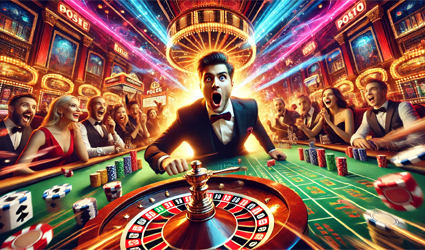 At the risk of being too medically focused, we’ll take a quick but deep dip into the pool of how dopamine works in the brain and its role in the human reward system - specifically, how it relates to gambling.
In the brain’s subcortical regions, dopamine release is mostly associated with reward and movement. Subcortical dopamine can also carry powerful sway over other cognitive areas, including reward learning, goal-directed behavior, attention, and decision-making. When an unexpected event indicates a chance for reward, dopamine is released, increasing the probability that the signal will recur under identical conditions.
Something physical takes place inside us when we have a winning spin. There is more to it. Certain combinations on the screen as a slot spin is coming to an end, or other environmental factors such as the lay of the cards in a blackjack game can create a sort of dynamic recall situation and dopamine can be released as if a win has occurred, even when it hasn’t - yet - and may not occur at all.
In a primate, this could be seen as driving behavior to complete an important task, like securing a meal or mating, with a real-time reward. For the gambler, it is the near-miss phenomenon and serves no purpose in the survival of the species and certainly not in the individual gambler - yet - that is the thrill we seek and why we play.
A new word?
Striatum
The striatum is an area of the brain associated with reward and decision-making processes.
An intriguing study on dopamine release focused on gamblers. It offers an important look into the neurological mechanisms that drive gambling behavior. Researchers looked at brain activity through PET scans (positron emission tomography) and found that problem gamblers had increased dopamine releases in the brain's striatum.
Another study looked at messing with dopamine receptors and noted something that occurred in the limbic system of problem gamblers.
Perhaps another new word: “limbic”.
We’ll take it easy…
The limbic system is a set of brain structures that helps regulate emotions and behavior.
We’ll be talking limbic for a moment...
The study results indicated that pathological gamblers had a greater release of dopamine in response to gambling-related tasks compared to healthy control subjects. The increased dopamine release was strongly correlated with the subjective excitement of gambling, as well as with the severity of their historic gambling behavior.
People with a gambling problem have more reward stuff going on, biologically, which affects their psychology.
Body-mind stuff, right?
Research has also shown that dopamine synthesis capacity is heightened in problem gamblers. Specifically, dopamine production was about 17% higher in various parts of the striatum, suggesting a hyperactive reward system in those people.
We seek the dopamine hit and we can get it at ten cents a spin or a hundred bucks a hand. We get it when we win and when we think we are going to win or almost win.
We all know the feeling of excitement gambling gives us or we wouldn’t partake in the pastime. It’s a losing proposition for most people most of the time but it’s also a thrill we can buy if we want to. Win or lose.
I love the thrill…
It’s the most intense for me when I have taken volatility into my own hands and it looks like it’s about to pay off - especially if the game has a pronounced anticipation soundtrack and visual effects.
Imagine changing your bet from five cents a line, all lines on a slot like RTG’s Nova 7s, and doubling the bet from $1.25 to $2.50 per spin - but - also staking only five lines at fifty cents each. Now imagine triggering the free spins and catching the rare Hyper Nova feature where wilds expand and all wilds create a 7x multiplier. The sound of thunder ensues and lightning bolts split the screen when a big win is shaping up.
My heart feels like it stops and my jaw drops, I go to the edge of my seat and lean in, laser-focused, nearly panting when I start to breathe again. That’s not hyperbole, it’s dopamine and thrill-seeking. I won’t even talk about how it feels when I do a Hail Mary at a dollar a line on four lines and hit the feature, but you can probably imagine…
Win or lose.
Quick disclaimer in complete transparency: As you might imagine, with a personality like mine I also enjoy very spicy foods, but that’s another subject altogether, except for the dopamine and endorphins.
The Role of Near Misses
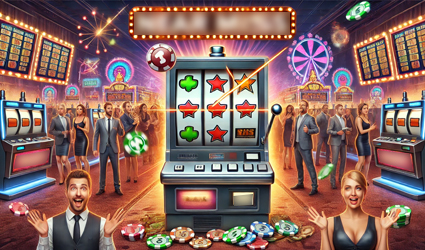 “Almost getting there” whether it is from a single slot spin or a session is a powerful trigger to gamble or chase, but there's more to it as obvious as that might sound. “If at first you don’t succeed, try try again” is not what we are getting at here.
A near-miss experience brushes up against the same pathways a true win does in the brain. The reward system gets triggered whether we win or not and that keeps us wanting to play.
The reward system is triggered, the primate wants to complete the task and so do we. It’s somewhat universal among beings with highly developed limbic systems - that’s why we can’t get emotionally involved at a psychological level during play if we want to be happy gamblers. It’s okay to experience disappointment at the end of a non-productive gambling session, but it shouldn’t hurt our feelings. It’s okay to bask in the thrill after a win too, but the thinking should never be about having caused the random event no matter how happy we might be. That’s not efficacy, it’s a delusion.
Here, the Eastern trope that ‘hope is the enemy of peace’ comes to true fruition. It’s not a metaphysical proposition, it’s a fact. But dopamine is not a student of fact any more than it cares whether you get the prize or almost get the prize. It has one job, and that is to fill you with a feeling even if you simply get close. It’s not a perfect response to some situations, but it has helped us get this far over the eons.
It’s not just gambling…
A soccer player will get the rush whether he makes the goal or not and will try harder the next time conditions are right - the video gamer will cycle over the same scenario uncountable times, feeling the rush each time they get to the crux - and try harder with each attempt. It’s all the same, but for us - the odds are baked in, they are set in stone, and we experience the dopamine rewards system’s effects when we play even though our actions can’t influence a game of pure chance.
We get the reward whether we accomplish the task or not as an encouragement to try again. It’s primal, and not entirely functional.
Most people can enjoy observing the near misses as they come along, but people with super sensitive dopamine triggers might find near misses suck them in to overplay and especially to overspend.
Simply understanding the impact of near misses on our emotions through brain chemistry can help keep us from chasing after a loss or even chasing a bigger win. The odds of the next spin being a great one are the same on the one-thousandth spin as they were on the first or second spin. And that brings us to…
The Gambler's Fallacy
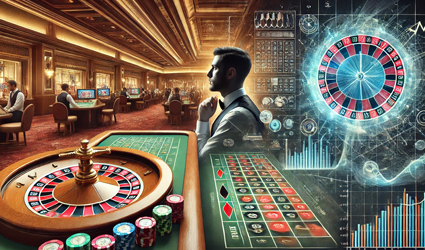 The gambler's fallacy is a mistaken belief that past random events exert influence over future ones in a way that deviates from statistical independence. For instance, if the roulette wheel lands on red or black several times in succession, we might falsely believe the other color is "due" next.
Let’s look at a coin toss for another example. After landing on heads several times we might expect tails to come up next, but in reality - as is proven by statistical analysis - each flip is completely independent and has a 50/50 chance of being heads or tails with a real coin. The fallacy comes from misunderstanding probability, and sometimes looking at possibility as a magical phenomenon. If we labor under this false pretense, we might expect short-term sequences to represent long-term averages.
That would lead to bad betting decisions.
Historical Context of the Gambler’s Fallacy
The gambler's fallacy has been influencing people since cavemen started tossing stones and bones around the fire. However, it purportedly came to the forefront of discussions about gambling psychology after something known as the “Monte Carlo Incident of 1913”. According to the BBC, “...[it] achieved notoriety at the Casino de Monte-Carlo on 18 August 1913. The ball fell on black 26 times in a row, and as the streak lengthened gamblers lost millions betting on red, believing that the chances changed with the length of the run of blacks.”
The fallacy reflects cognitive bias wherein people try to understand but misinterpret the nature of random sequences, believing patterns must correct themselves. After all, after a million coin tosses, about half of them will be heads and the other half tails (not accounting for the rare edge-landing). It makes sense anecdotally and is born out by large numbers, but every toss still has a 50/50 chance of landing on heads.
Scientific Studies
The gambler's fallacy has been researched extensively. One study by Tversky and Kahneman in the early 1970s showed how people mistakenly expect small samples to reflect long-term probabilities. Researchers have referred to this as the "law of small numbers" since the study was released. Yet another study by Clotfelter and Cook in the early 1990s analyzed the behavior of lottery players. They found that players often choose numbers they believe are "overdue" for a win.
These and other studies reveal that the gambler’s fallacy influences not just casual gamblers but also those engaging in more structured forms of betting. The house edge is already built in by the mathematics, and perhaps, unfortunately, it is widened by mistaken beliefs that lead to bad betting choices, especially if the player increases their stake to “catch the turn” and then goes bust without the ability to claw back any losses.
Interactive Element
Let’s try a thought experiment to illustrate the gambler’s fallacy more personally. Flip a coin 10 times and record the outcomes. Try to pay attention to whether or not you start predicting future flips based on past results. It’s only natural, but it’s not helpful for a gambler to fall prey to the fallacy.
Another way to test yourself for vulnerability to the fallacy is to play a demo game of roulette. Do you find yourself thinking that red should come up next after the ball lands on black a few times in a row?
These exercises might seem silly but doing them can show you how the human brain seeks patterns where none exist. It’s natural, a part of our evolution and survival, but it can lead to erroneous beliefs central to the gambler’s fallacy and end up helping us lose money when we gamble.
The Illusion of Control
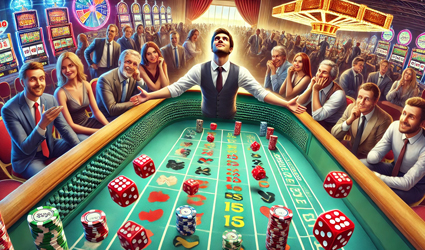 While this one might sound like somebody else’s hoodoo-voodoo initially, a closer look might show us that we are susceptible to it. The illusion of control in gambling happens when we believe we can influence random outcomes.
I know, silly, right?
Let’s look to the game of craps for an example, a game where players get to throw the dice themselves, rather than have the dealer feed them cards or spin a roulette wheel.
We can blow on the dice for good luck but any droplets that stick to the dice are not likely to affect their final position - motive force takes care of that. We can set them in our hand and spin them a certain way on the table, resting on the back wall… but no test of large enough numbers has ever concluded that there is a way to control the outcome of a game of dice.
No technique is going to affect the outcome of the roll. Sure, there might be a statistical anomaly after 500 throws, but not after 5,000 or 50,000 which is what we’d have to see to prove, statistically, that there is any way to influence the dice.
Slot players might think that pressing the button at a specific moment can influence the result, despite outcomes being entirely random. The random number generator is spitting out thousands or tens of thousands of possible outcomes per second, and while any split second will give a different result than any other moment in time will, there is no way to know what that outcome might be.
Sure, features and bonuses and other results can appear to be “clumped up” in time, but they are also few and far between, non-existent, or sporadic during any interval of spinning the reels. This is the cluster illusion, sometimes referred to as the “hot hand fallacy”. It can happen on Wall Street as easily as it occurs in the local casino, and on home computers or smartphones. The human condition makes us see patterns where none exist, it’s how we make sense out of a world full of chaos - we want to see order, we must see order, so we do.
Psychological Theories
Langer’s Illusion of Control is a psychological theory among many others that suggests we might overestimate our ability to control events by trying to introduce skill into a completely random and non-influenceable process. Cognitive biases, such as overconfidence and the clustering illusion, also contribute to making individuals believe their actions can influence chance events. They simply can’t. If they could, someone would write a book, and if that book held valid information the authors would be out skinning the casinos instead of hawking male bovine refuse in the form of a book.
Social and Environmental Factors
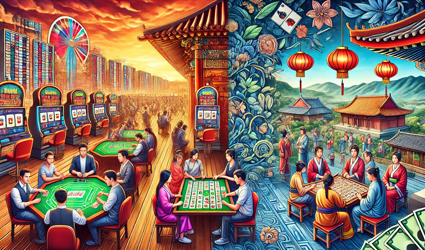 Regardless of the moral or legal implications, players in some cultures simply enjoy gambling more than some in other countries. Access to online gambling in the privacy of one's own home can add to the thrall through a sense of security. Commercial land-based casinos as well as online gambling venues are designed to capture a player’s attention and keep them gambling. Regardless of the size of the bankroll, the more times it is exposed to the house advantage, the more likely the operator is to get their cut.
Eventually, for most who don’t stop when they are ahead, the house edge will take more than the operator’s share via what’s left over after the return to player percentage is paid out as the remaining bankroll is eroded more and more each time it is cycled through. Players will chase that winning feeling even when they are losing and near misses do not help them quit as winners many times.
Casino Design
Gambling houses on-land and online are carefully designed to enhance the gambler’s experience. At a brick-and-mortar casino, dim lighting, stimulating sounds, and maze-like layouts can keep players engaged. The environments are designed to eek just one more play out of visitors, and another, and another.
Online Gambling Environment
Online gambling platforms mimic in-person casino excitement by using interactive features like live chats, gamification and leaderboards, and integrated social media elements. Even more so than land casinos to the average player, online platforms offer personalized gaming experiences and virtual rewards. These can enhance player engagement and foster a competitive online community a player may long for, or a least think about when away from a gambling device, wanting to return.
Cultural Influences
In some societies, gambling is seen as a healthy social activity, while in others, it is frowned upon and discouraged. These cultural norms shape gambling habits, risk tolerance, and the social acceptance of gambling activities but the online gambler can more easily overcome being stigmatized as long as they keep their activity on the down low and don’t let the pastime cause problems in their life.
Responsible Gambling
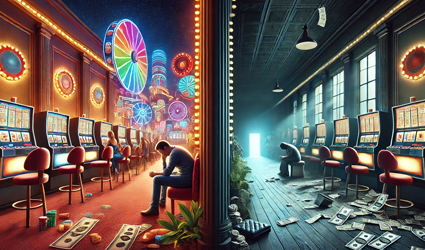 Nearly all online gambling sites have a section on responsible gambling. Some regulatory jurisdictions use a good portion of the tax money and other fees they collect to try to mitigate any harm gambling might do to their citizens. Some countries put their entire revenue pools into it and others like the United Kingdom use fines and levies against operators to fund special projects.
It would seem, based on some of the research and studies cited earlier, that some people are simply more predisposed to developing gambling problems than others. Some of the research that shows that pathological gamblers have a dopamine synthesis capacity nearly 20% higher than others might also mean there could be targeted and individualized treatment in the future for those who suffer from a problem while others who may experience extreme thrills can simply enjoy gambling as a recreational activity.
Furthering the Anecdote
It’s possible too that a lifelong gambler like myself could someday succumb to pathological gambling because I seek the thrill with a vengeance.
However, when I caught myself thinking about depositing after a sizable loss eons ago, I gave myself a hard “No” and decided to explore alternatives later.
I came up with using a willing suspension of disbelief in my own “gambling movie” and trying to experience the greatest possible thrills within my limited responsible gambling budget. I set floors and ceilings, manipulate volatility to the extreme, and never, ever break my budget or chase a loss or even a win with a fresh deposit. I get in and get out. When I lose I consider it money well spent trying to buy a thrill. When I win, I let a fattened bank account deliver its own rewards.
While any statistician worth their salt would tell you that my folly reduces the chance of taking down a jackpot, I counter that random jackpots only “care” about how much I bet each spin, I do it a lot, and I have had my winnings capped at 50,000x line bet uncountable times while playing certain slots - nobody betting all lines within my budget could have possibly won as much as I have - and conversely, lost as much either. But I seek the thrills.
Gambling Awareness Campaigns
There are countless strategies players use to gamble responsibly and a great amount of research and in-the-trenches activity helping those who have developed a problem.
Responsible gambling campaigns like GambleAware’s BetRegret and others focus on education and prevention. Some of these have shown moderate success in reducing problem gambling through awareness and behavioral change initiatives. Some government help agencies, such as Massachusetts in the US state that the most frequently studied treatment type for gambling disorder is Cognitive Behavioral Therapy (CBT).
Tools and Strategies
Self-exclusion programs, limit-setting tools, and reality checks are effective strategies players can use to manage their gambling behavior and avoid excessive losses. If harm reduction is a concern, a simple search engine query on “tips for safer gambling” should turn up some usable information.
Personal Stories
Gambler’s Help in Australia posts personal stories online from people who have overcome a problem and those dealing with the impact of harm from gambling.
Expert Advice
Experts recommend setting time and money limits, taking regular breaks, and staying informed about the odds to maintain a healthy approach to gambling.
Conclusion
The main psychological factors we have discussed include the dopamine reward system, near misses, the gambler's fallacy, and the illusion of control. These illustrate how our brains are “wired” to respond to gambling stimuli. Our responses may reinforce the desire to continue gambling through perceived but unreal rewards and cognitive biases.
Aside from the author’s anecdotes, do you feel like you’ve learned anything valuable about the psychology and biology of gambling that you can apply to your own life? Of course, gambling is supposed to be fun and when the fun stops the pastime probably should too.
If the dopamine response system has hijacked the pleasure/reward circuits in your brain and you more than crave a flutter or a punt, a spin, or a session, it might be worth considering the possibility you might be susceptible to gambling addiction. Addiction is not fun. Addiction can send your emotional danger-sensing “circuits” into overdrive, and that can make you feel anxious and stressed when you're not able to play your favorite game. If you find yourself in that place, simply getting relief from stress or anxiety might not be a good enough reason to continue playing.
For more information and links to helping organizations please see our Problem Gambling pages.
On This Page
![]() Top Online Casinos

